Meal prep and weight loss are a perfect match. When your meals are already portioned and ready, you eliminate the two biggest enemies of a calorie deficit: impulse eating and guesswork about portion sizes. Here is how to set up a meal prep system specifically designed for sustainable, comfortable weight loss.
Contents
Why Meal Prep Is the Best Tool for Weight Loss
Diets fail for one primary reason: inconsistency. You eat well for a few days, then a stressful afternoon hits, there is nothing healthy in the fridge and you order pizza. Meal prep eliminates this failure point entirely:
- Pre-portioned meals = automatic calorie control – When your meals are already measured and packed, there is no guesswork and no accidental overeating. Every meal is exactly the right size
- No decision fatigue – In a calorie deficit, your willpower is already taxed. Making food decisions when hungry and tired is a recipe for failure. Meal prep removes the decision entirely
- Reduces "convenience eating" – The number one driver of excess calories is reaching for whatever is fast and easy. When a healthy meal is already ready in the fridge, it is just as convenient as ordering takeout
- Eliminates hidden calories – Restaurant meals and takeout contain far more oil, butter, sugar and salt than home-cooked food. Cooking at home gives you complete control over ingredients
- Saves money – Weight loss often means spending less on food overall. Meal prep reduces waste, prevents impulse purchases and eliminates delivery fees
Studies show that people who plan and prepare their meals in advance are significantly more likely to lose weight and keep it off compared to those who eat ad hoc.
Calculating Your Calories and Building Your Plate
Before you start prepping, you need a calorie target. A safe, sustainable deficit is 300–500 calories below your maintenance level:
- Step 1: Calculate your TDEE (Total Daily Energy Expenditure) using an online calculator. This is how many calories you burn per day
- Step 2: Subtract 300–500 calories. This is your daily target for weight loss (roughly 0.5–1 lb per week)
- Step 3: Divide across 3–4 meals
The ideal weight loss plate breakdown:
- 50% vegetables – High volume, low calorie. They fill you up without blowing your budget. Broccoli, spinach, zucchini, bell peppers, green beans
- 30% lean protein – Essential for preserving muscle mass during a deficit. Chicken breast, turkey, fish, tofu, eggs
- 20% complex carbs – Provides energy and satisfaction. Sweet potato, brown rice, quinoa, oats
- Add healthy fats in moderation – A drizzle of olive oil, a quarter avocado, a small handful of nuts. Fats are calorie-dense, so measure them carefully
Example meal at 450 calories:
- 5 oz grilled chicken breast (165 cal)
- 1 cup roasted broccoli with 1 tsp olive oil (75 cal)
- 1/2 cup cooked brown rice (110 cal)
- Large mixed green salad with lemon dressing (50 cal)
- 1/4 avocado (60 cal)
High-Volume, Low-Calorie Meal Prep Recipes
The secret to comfortable weight loss is eating meals that are physically large but calorically moderate. These recipes use the "volume eating" principle:
Breakfast (300–350 calories):
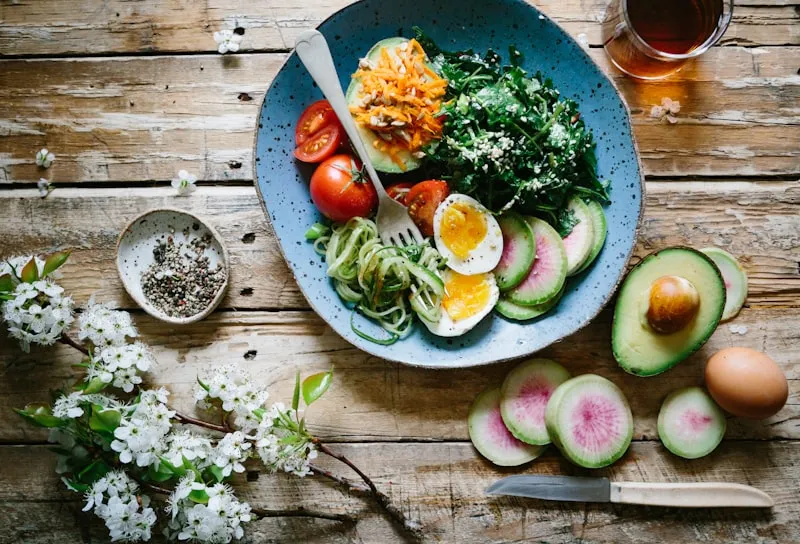
- Veggie egg scramble: 3 eggs + 2 cups spinach + 1/2 cup mushrooms + 1/4 cup diced onion. Prep the veggies on Sunday, scramble fresh each morning in 5 minutes (280 cal, 21g protein)
- Protein overnight oats: 1/3 cup oats + 1 scoop protein powder + 1/2 cup almond milk + 1/2 cup berries. Mix in jars on Sunday (320 cal, 30g protein)
Lunch (400–450 calories):
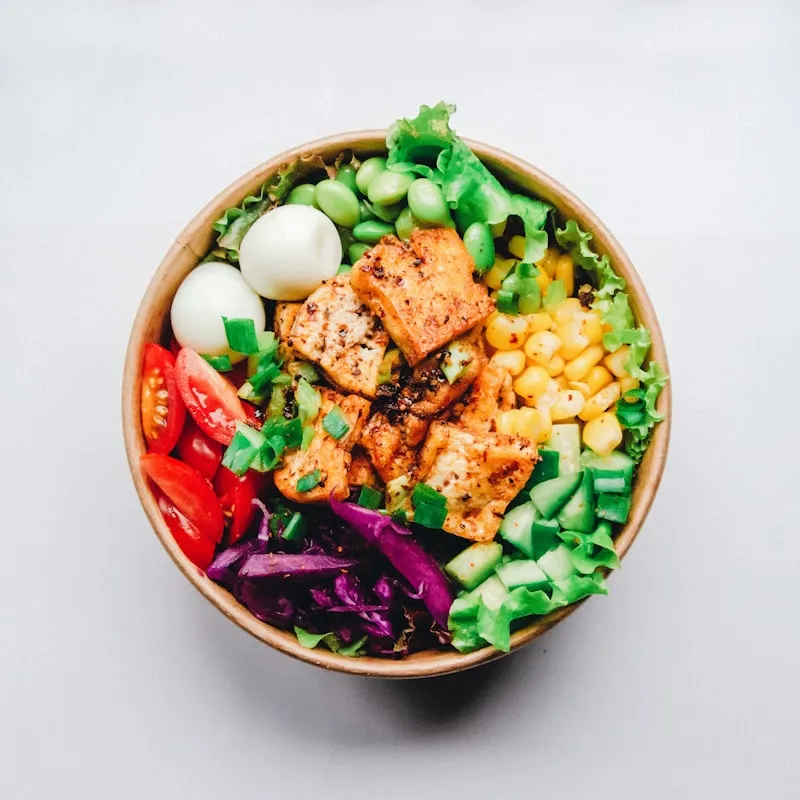
- Chicken power bowl: 5 oz chicken + 2 cups mixed greens + 1/2 cup quinoa + roasted vegetables + 2 tbsp light vinaigrette (420 cal, 40g protein)
- Turkey lettuce wraps: 5 oz seasoned ground turkey + lettuce leaves + diced tomato + 2 tbsp salsa + 1/4 avocado (380 cal, 35g protein)
Dinner (400–450 calories):
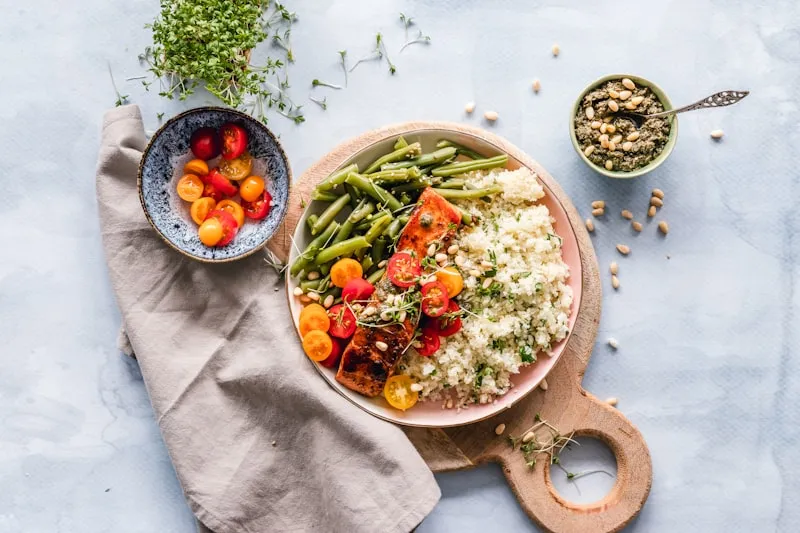
- Baked salmon with vegetables: 5 oz salmon + 2 cups roasted zucchini and bell peppers + 1/2 cup sweet potato (440 cal, 35g protein)
- Cauliflower rice stir-fry: 5 oz shrimp or chicken + 2 cups riced cauliflower + mixed vegetables + soy sauce + ginger (350 cal, 38g protein)
Snack prep (100–150 calories each):
- Veggie sticks with 2 tbsp hummus (100 cal)
- 1 hard-boiled egg + 5 cherry tomatoes (100 cal)
- 1/4 cup cottage cheese + cucumber slices (80 cal)
- 1 small apple + 1 tbsp almond butter (150 cal)
Staying Consistent: The Psychology of Weight Loss Meal Prep
The physical prep is only half the battle. Here is how to make meal prep a sustainable weight loss habit:
- Do not go too aggressive – A 300–500 calorie deficit is sustainable. Cutting 1,000+ calories leads to binging, muscle loss and eventual rebound weight gain. Slow and steady wins
- Build in flexibility – Prep 5 days of meals and leave 2 days flexible. This prevents the "diet prison" feeling that causes people to quit entirely
- Include foods you enjoy – If every meal is dry chicken and plain broccoli, you will quit within a week. Use sauces, spices and variety to make meals you genuinely look forward to eating
- Weigh yourself strategically – Weight fluctuates daily due to water, sodium and digestion. Weigh weekly at the same time (morning, after bathroom) and track the trend over weeks, not individual weigh-ins
- Take progress photos – The scale does not tell the whole story, especially if you are exercising. Photos show body composition changes that the scale misses
- Have a "rescue meal" in the freezer – For those days when your prepped meals run out or sound unappealing, a frozen portion of soup or chili prevents a takeout relapse
- Celebrate non-scale victories – Clothes fitting better, more energy, better sleep, improved gym performance. These matter as much as the number on the scale
Conclusion
Meal prep removes the biggest obstacles to successful weight loss: guesswork, impulse eating and convenience food. By spending 2 hours on Sunday prepping portioned, calorie-controlled meals, you set yourself up for a week of effortless adherence to your calorie goals. The key is to keep it simple, include foods you enjoy and build flexibility into your system. Weight loss does not have to be complicated – it just has to be consistent.
Ready for the challenge?
Start now with the 21-day challenge.